Read. Discover. Connect.
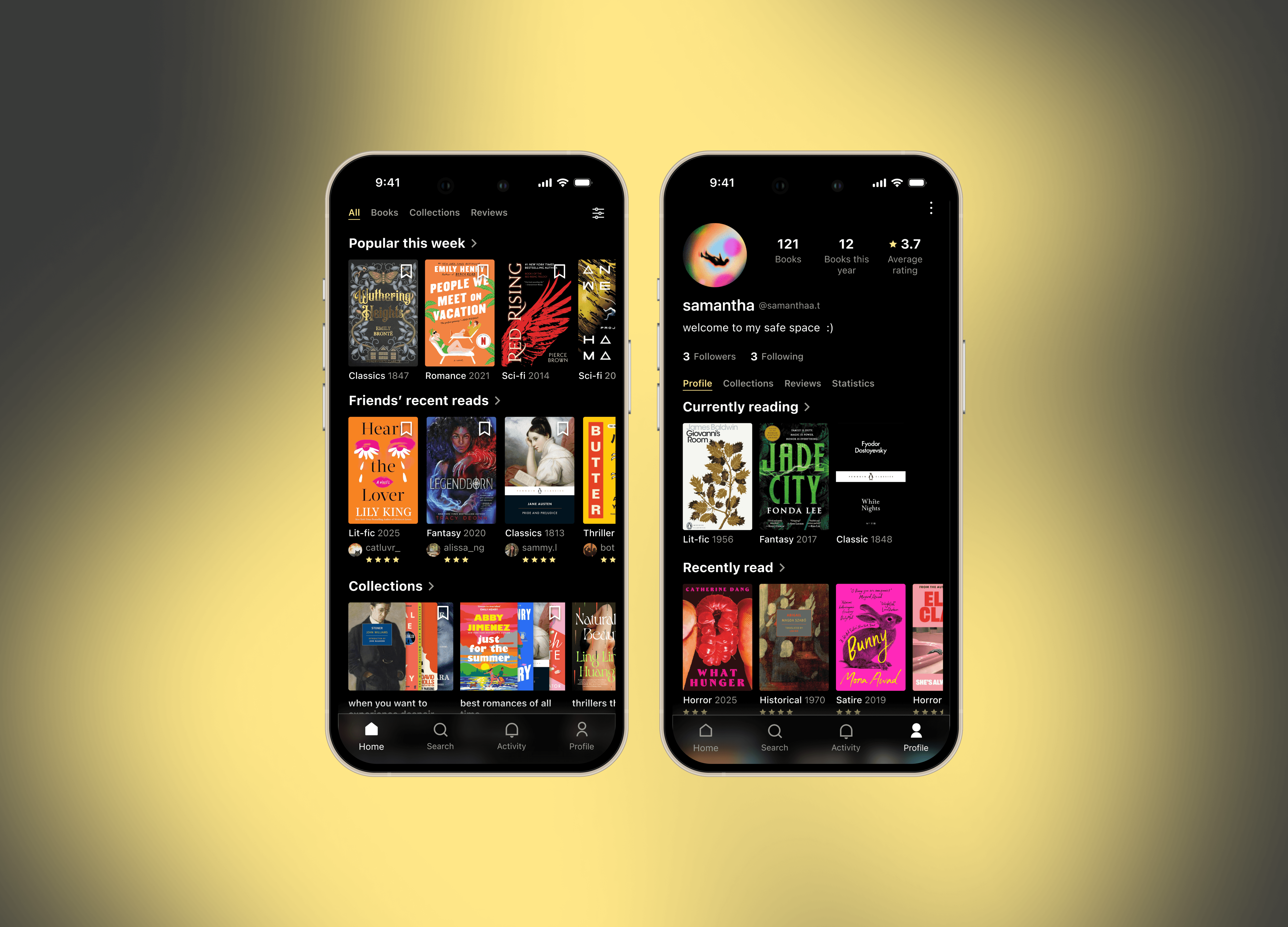
A community-first reading app inspired by BookTok.
A place to find books through people, not algorithms.
Bookmarkd is designed for readers drawn to BookTok’s energy and sense of community, but frustrated by repetitive recommendations and scattered tools for tracking and discovery.
By prioritising curated collections, reader reviews and shared taste, Bookmarkd shifts book discovery away from algorithms and towards community-driven exploration.
Role
UX/UI Designer
Team
Solo
Tools
Figma
Discovery
BookTok sparks reading but creates noise
BookTok is a reading subculture on TikTok where users share short-form reviews, recommendations and emotional reactions to books.
Its influence extends beyond entertainment; it shapes publishing trends, reading identities and collective taste among young adults. Visibility is largely driven by engagement metrics, meaning emotionally intense or trend-aligned content is amplified.
As a result, discovery is not neutral; platform mechanics shape it.
Over-saturation of mediocre titles
Viral books dominate, making it hard to discover less-hyped gems
Algorithmic reinforcement
Limits exposure beyond existing preferences
Trend-driven bias
Algorithms in other apps (Goodreads, Fable, StoryGraph) often reinforce this cycle
Mapping the Reader Experience
Competitor analysis

Goodreads
Strengths
Extensive book database
Robust shelving & custom lists
Large volume of user reviews
Strong tracking infrastructure
Weaknesses
Cluttered and outdated interface
Discovery heavily popularity-driven
Search results overloaded with editions
Gaps
Goodreads excels at database depth and organisation but lacks modern, intentional discovery experiences which prioritise volume and ratings rather than curated context.

Storygraph
Strengths
Advanced filtering (mood, pace, themes)
Content warnings & detailed metadata
Engaging reading stats & visualisations
Weaknesses
Often surfaces well-known books within filtered categories
Filter-heavy interface may overwhelm casual users
Social discovery feels secondary
Gaps
StoryGraph provides analytical depth and structured tracking but lacks vibrant, socially contextual discovery mechanisms.

Fable
Strengths
Integrated book clubs & discussions
Social reading experience
Modern interface
Weaknesses
Feed-based discovery influenced by popularity
Limited advanced filtering for search
Search bar prioritises exact matches
Gaps
Fable improves social interaction, but discovery feels popularity-driven rather than personalised to users' reading data.
What readers actually want
To understand this ecosystem, research included:
Content observation and trend analysis on TikTok
Informal interviews with young adult readers
Behavioural analysis of discovery and review patterns
The goal was to identify how existing reading platforms prioritise algorithmic or popularity-driven discovery over intentional, user-led curation.
Several patterns emerged:
1 - Discovery is system-driven
Tension
Readers believe discovery is personal, yet most choices are shaped by algorithms and popularity signals.
Opportunity
Discovery must support active browsing, not just algorithmic surfacing.
2 - Search is transactional
Tension
Search works for known titles but fails to support exploratory browsing.
Opportunity
Design search to enable users to search by themes, emotions, or curated collections.
3 - Popularity replaces context
Tension
Ratings and trends signal quality, but rarely explain why a book resonates.
Opportunity
Make books discoverable through themes, moods and curated context.
Define
From passive feeds to meaningful discovery
Research revealed that existing reading platforms prioritise algorithmic feeds, popularity metrics, or data-heavy tracking systems.
Discovery is trend-driven.
Search is transactional.
Tracking is administrative.
While readers want meaningful, personal discovery, platforms largely surface what is already popular, not what is contextually relevant.
Problem
Readers lack a structured yet expressive way to discover, organise and share books beyond algorithmic popularity.
How might we design a reading experience where community insight — not algorithms — shapes how books are discovered?
Ideate
Discover the next read through the community
The ideation phase focused on restructuring discovery at the interface level, shifting visibility from algorithmic ranking to community curation.
This shift is most visible across the platform’s core discovery screens, which include the home screen.
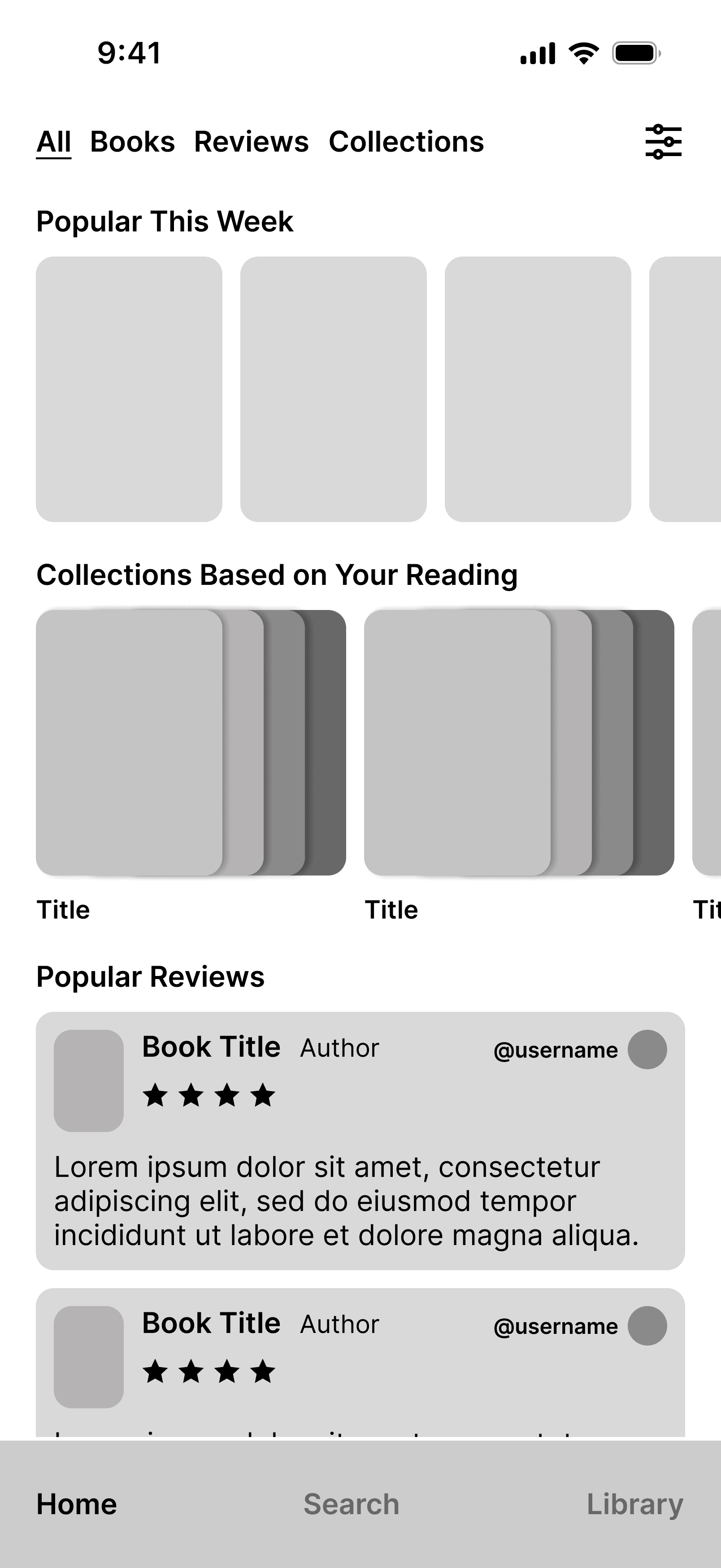
1 - All - Research in one shared space
Typical:
Discovery is book-first. Reviews and discussion are nested within individual book pages, limiting exploration to one title at a time.
Bookmarkd:
Books, reviews and curated collections coexist in a single discovery space which allows users to move fluidly between titles, perspectives and themes.
Impact:
Discovery becomes expansive rather than isolated. Users can find their next read through conversation, curation or context.
2 - Books - Filter to your taste
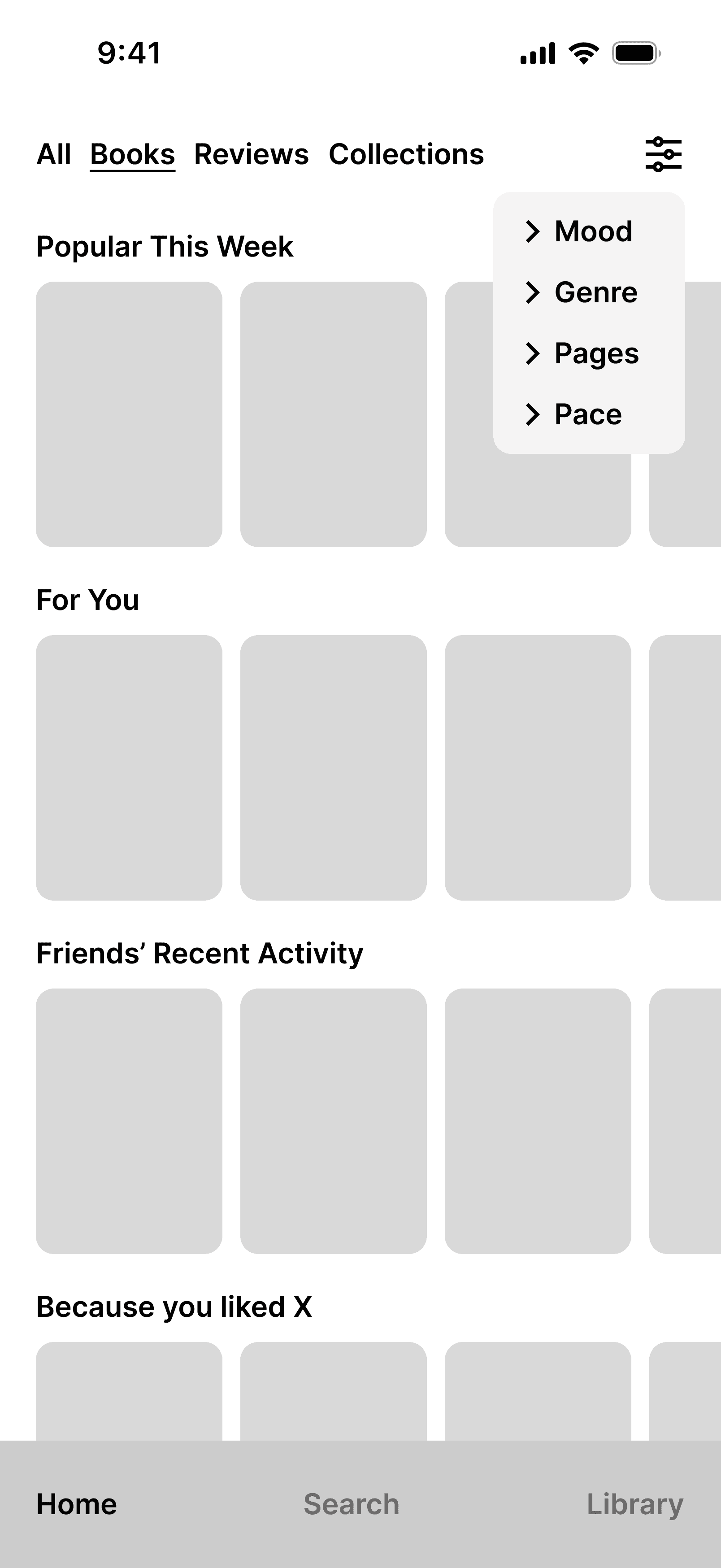
Typical:
Categories are predefined and static, limiting discovery to developer-set classifications.
Bookmarkd:
Books can be explored through flexible, user-driven filters that reflect mood, interest and reading intent.
Impact:
Visibility shifts from fixed categories to personal preference, giving users greater control over what surfaces.
3 - Reviews - Trust the community
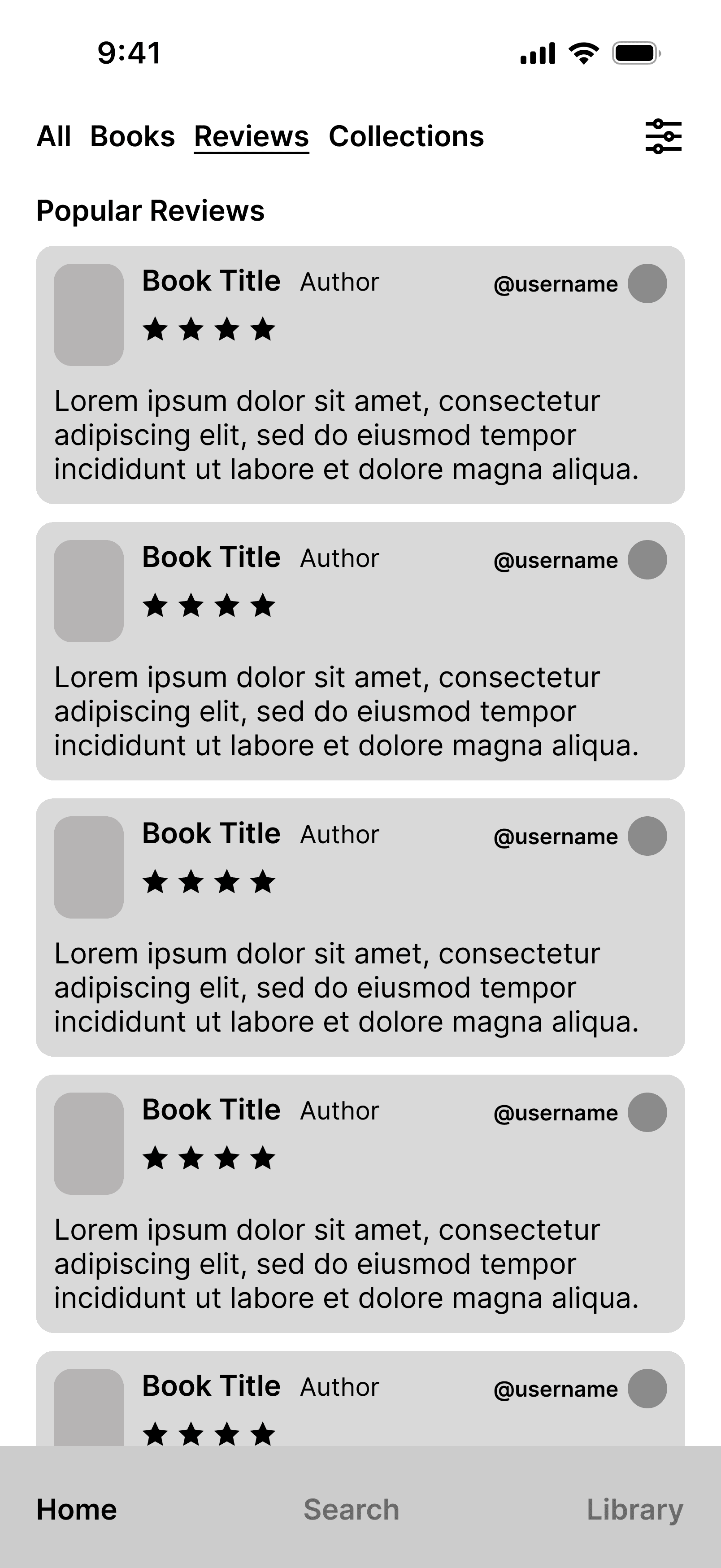
Typical:
Reviews are only visible within a book’s detail page, making community insight secondary to ratings.
Bookmarkd:
Reviews exist as a discovery layer of their own that are searchable and viewable across books, not confined to one title.
Impact:
Community perspective becomes a primary decision-making tool, strengthening trust in the discovery process.
4 - Collections - Let readers shape their discovery
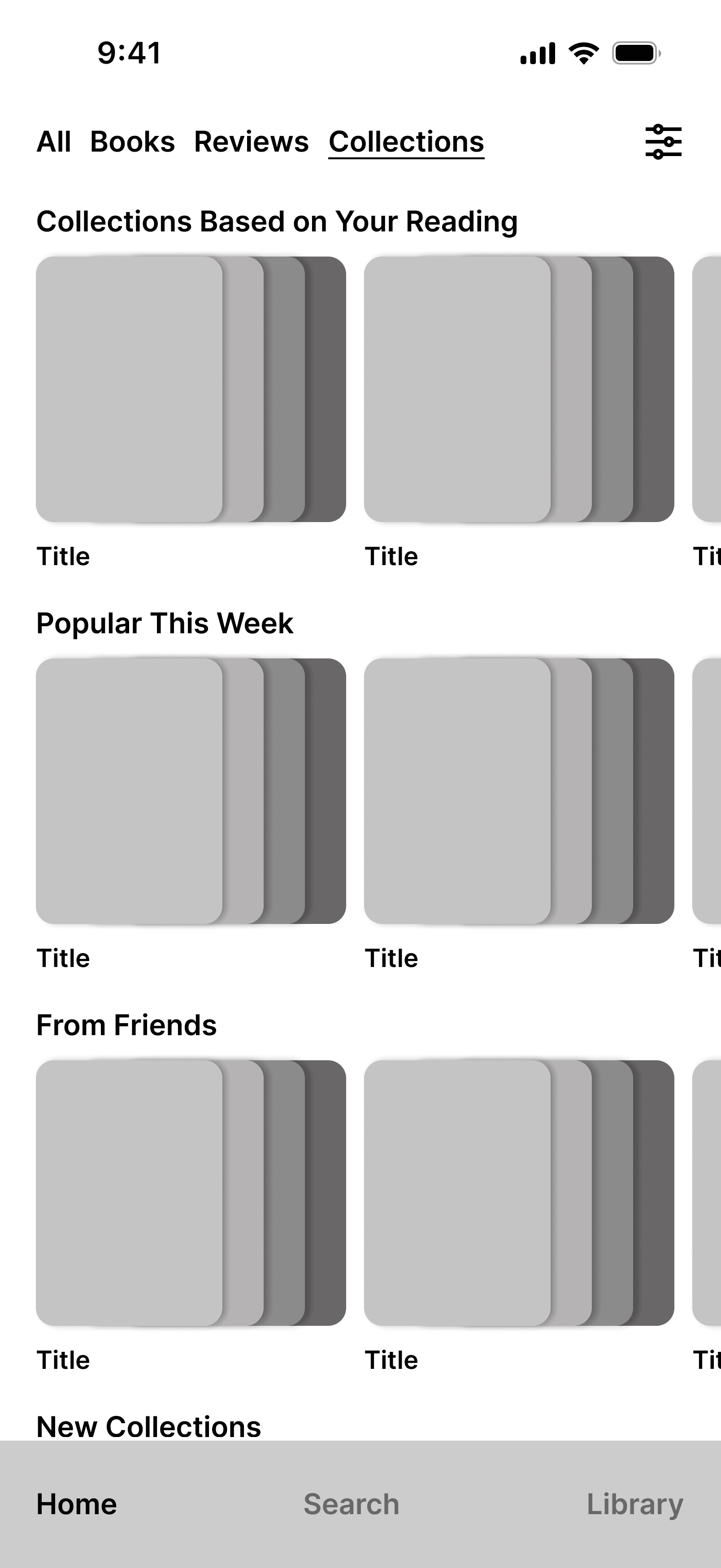
Typical:
Lists are private or buried within individual profiles.
Bookmarkd:
Collections are public, searchable and designed as shared discovery environments curated by readers.
Impact:
Users shape visibility collectively by creating a people-powered alternative to algorithmic feeds.
Prototype
From browsing to finding a book
A simple flow was created to test how users move through the platform when searching for their next read.
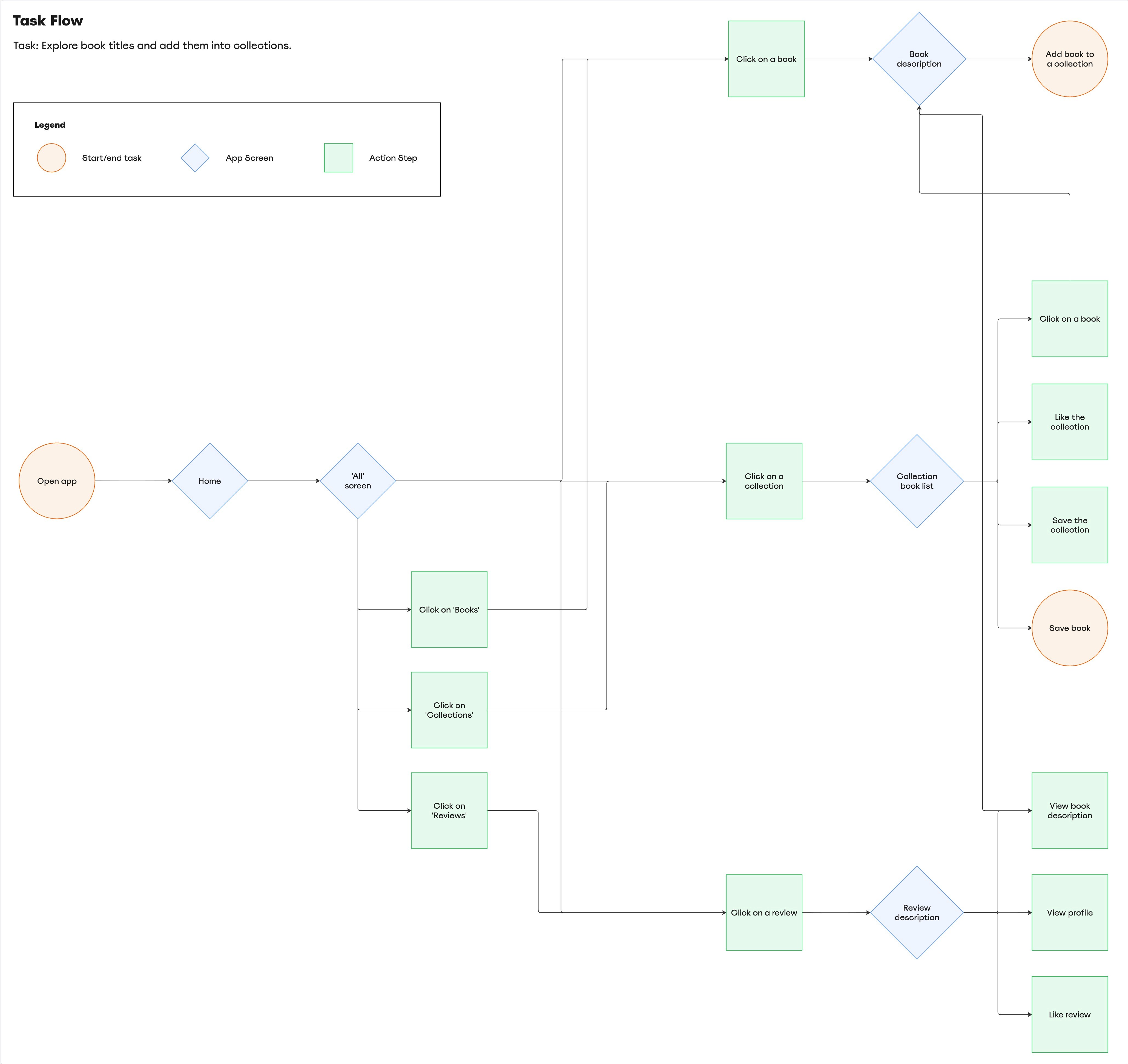
A prototype was tested to see how users navigate between books, reviews and collections when searching for their next read.
The goal was to observe whether surfacing community activity directly within discovery could make finding books feel more intuitive and engaging.
Discover through books
Users can browse and filter books to explore new titles based on their interests.
Discover through collections
Curated collections group books around themes, moods, or shared tastes, allowing users to discover recommendations from other readers
Discover through reviews
Reviews provide quick insight into how others experienced a book, helping users evaluate whether it matches their preferences.
Testing & Iteration
Refining book discovery
To evaluate how readers moved between discovery modes and the ease of saving books, the prototype was tested with users familiar with reading apps and book communities.
What we tested:
Browsing books, collections and reviews as separate discovery spaces
Search behaviour when looking for books
Saving books while browsing
What we learned:
Users naturally moved between all three modes, experiencing richer discovery when books, reviews and curated collections were visible together
Participants often started with search, using both specific titles and broader themes, indicating discovery should support exploratory searches
Users wanted to save books directly from collections or reviews without opening the full book page
Key changes:
1) Improving the Home Screen
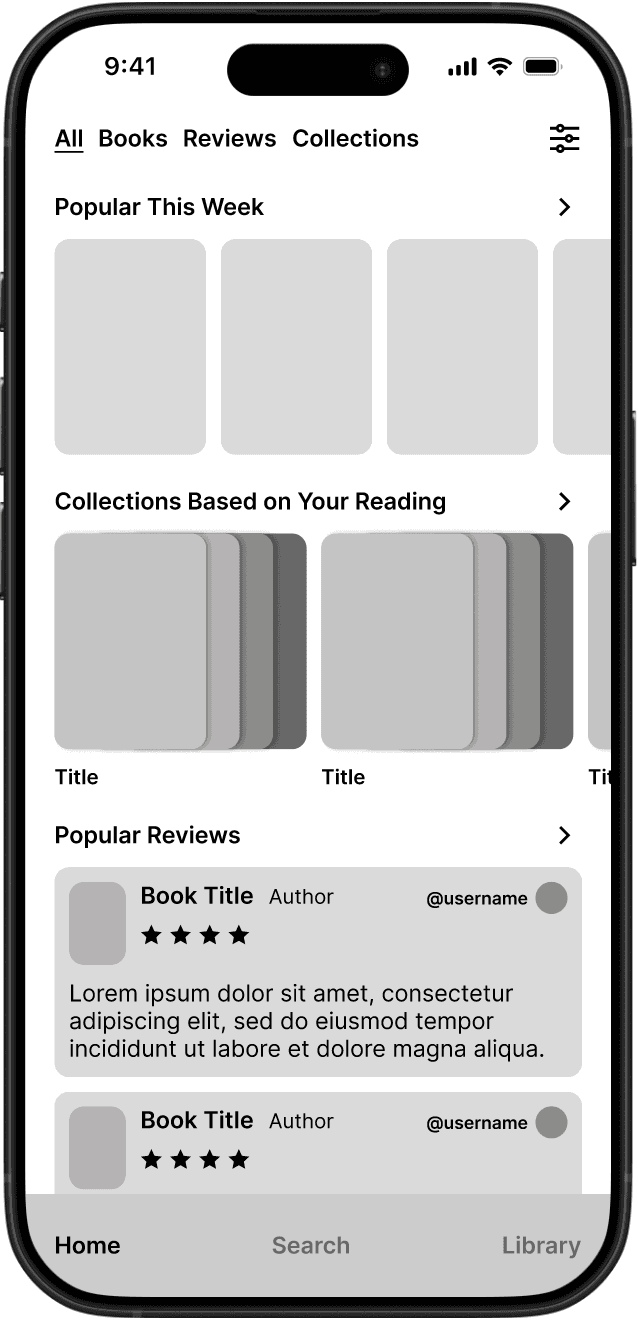
Before
After
2) Expanding the search
Before
After
3) Adding an 'Activities' tab
Before
After
Insights
The changes strengthened Bookmarkd’s core goal: helping readers discover books through the community rather than algorithms.
Readers explored books through multiple pathways rather than relying on a single browsing method
Search became a starting point for curiosity, supporting broader themes and reading interests
Community signals such as reviews and collections played a stronger role in shaping reading decisions
Together, these changes positioned Bookmarkd as a reading platform where book discovery is guided by shared taste, conversation and reader perspectives rather than algorithmic ranking.
Outcome
A more community-driven discovery experience
The final design brings Bookmarkd’s key features together to create a reading experience that is social, community-led and centred around shared discovery.
Reflection
What designing Bookmarkd taught me
Designing Bookmarkd showed how the energy of communities like BookTok comes from shared participation and personal recommendations. The challenge was translating that behaviour into a structured reading platform.
Community voices shape discovery: BookTok revealed that readers trust recommendations from other readers. Surfacing collections, reviews and activity feeds helped bring those voices into the discovery experience.
Discovery is exploratory: Readers rarely rely on a single method when choosing a book. Supporting books, collections and reviews created multiple pathways to explore.
While BookTok thrives on spontaneous sharing, Bookmarkd demonstrates how thoughtful interface design can create clearer spaces for readers to curate, review, and recommend books.
